

Your Data Is Telling You Something. The Question Is Whether You Are Asking It the Right Thing.
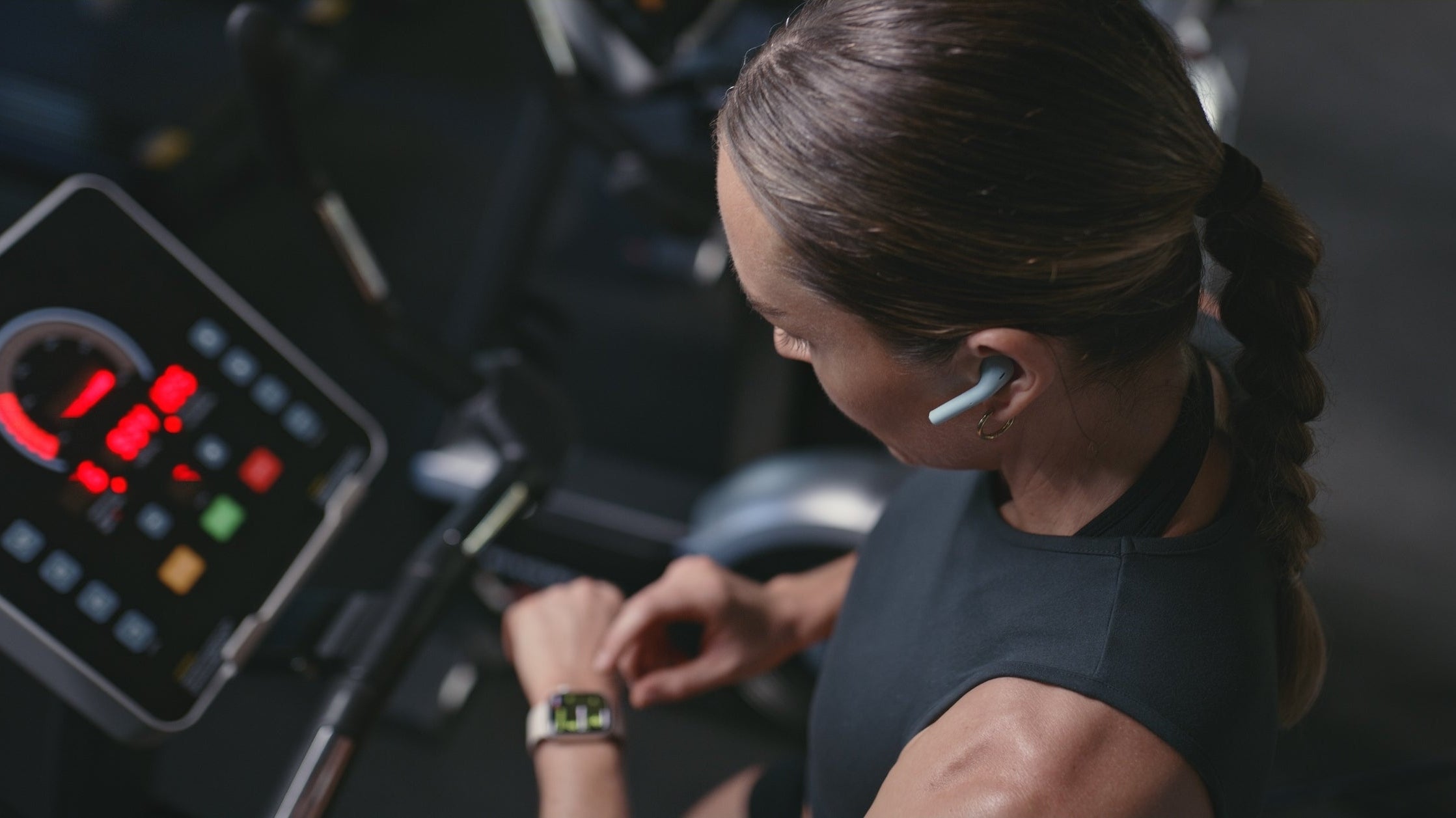
Most people using wearables now have access to more data about their biology than a hospital patient had twenty years ago.
Data on heart rate variability each night. Data on sleep phases, the specific architecture of sleep, as opposed to just hours slept. A readiness score based upon multiple physiological inputs. Data on strain and recovery capacity. This is all real data. The engineering that goes into collecting it is impressive. And there's a significant gap between what this technology collects and what many users assume it collects.
Wearable devices aren't being criticised here. Rather, a different but perhaps equally valuable question is how we can use them effectively.
What readiness scores measure, and what they don't
A readiness score combines output variables: heart rate variability, resting heart rate, sleep duration, respiratory rate, and on some platforms, an estimated staging of your sleep.
Each of these is a valid measure of your physiological status at any given time. The combination produces a single number that serves as a surrogate measure of your ability to perform.
The issue isn't whether the data from the original signals are valid. The issue is what the combined scores represent, and therefore can be inferred to represent, versus how they structurally fail to do so.
Heart rate variability, the most commonly used signal in readiness algorithms, assesses the variance in time intervals between successive heartbeats. At rest, higher levels of HRV have been shown to correlate with an individual's parasympathetic dominance and their ability to recover from stress. That has been extensively documented (Shaffer and Ginsberg, 2017). However, this is a measure of an individual's current autonomic state, not of the system that generates it.
There's an important further complication. HRV itself displays a circadian rhythm. It rises through the night as parasympathetic tone increases and falls in the morning as the sympathetic component of the cortisol awakening response activates. This means that the same individual measured at different clock times will produce different HRV values not because their biology has changed but because the circadian phase at measurement differs (Sammito et al., 2023). Consumer wearables normalise for this within their algorithms, but those algorithms are proprietary. As a recent wearable validation study noted, there is "little transparency into what metrics affect each device's own Readiness or Recovery Score" (Quigley et al., 2025).
You're trusting a number whose construction you can't inspect. That's not a criticism of the technology. It's a structural feature of how proprietary consumer wearables are built. But it's worth understanding.
The circadian coherence gap
Here is the variable that readiness scores don't measure, and which the biology literature increasingly identifies as one of the most consequential determinants of performance capacity.
Circadian coherence, the degree to which the central clock and peripheral clocks are running in phase with each other and with sufficient amplitude, isn't captured by HRV, resting heart rate, or any current consumer wearable readiness metric. It's not because the technology is failing. It's because coherence isn't what those algorithms were designed to measure.
Consider two scenarios.
Individual A has slept eight hours, has an HRV reading at or above their personal baseline, and scores green on their readiness platform. They've also flown across three time zones in the past 72 hours, eaten at irregular times, and been exposed to bright light in the two hours before sleep on each of the past four nights. Their readiness score is high. Their circadian system is misaligned. Those two facts coexist without contradiction.
Individual B has maintained a consistent sleep-wake schedule for fourteen days, eats within a defined window aligned with the morning phase, and receives outdoor light within thirty minutes of waking each day. They went to bed slightly later than usual last night after a social event. Their HRV is marginally below baseline. Their readiness score is amber. Their circadian system is well-entrained and running at high amplitude. The score underrepresents their biological state.
Neither of these outcomes is a malfunction in the wearable. They provide evidence that physiological readiness and experienced readiness aren't the same thing, and that both differ from circadian coherence as a biological construct.
What forced desynchrony protocols tell us
The most rigorous evidence for the independent effect of circadian phase on performance comes from forced desynchrony protocols. These are laboratory studies in which subjects are placed on non-24-hour sleep-wake cycles, typically 28 hours, that sit outside the circadian clock's range of entrainment. The result is that sleep and wake periods progressively rotate through all phases of the circadian cycle, allowing researchers to separate the effect of circadian phase from sleep debt.
Studies utilising forced desynchrony protocols have examined the relationships among circadian phase, core body temperature amplitude independent of circadian phase, wakefulness duration, and cognitive performance. The consistent finding is that circadian phase exerts independent, significant effects on cognitive performance that aren't fully explained by how much sleep an individual has accumulated (Wyatt et al., 1999; Dijk and Czeisler, 1995). You can be adequately rested by sleep duration and still be performing at a fraction of your ceiling because you're operating at the wrong circadian phase.
Research using a forced desynchrony protocol found a significant circadian rhythm in cognitive performance, with impairment 3.6 times larger during the biological night than during the biological day. That difference persisted regardless of sleep stage at awakening and couldn't be explained by differences in underlying sleep drive (Scheer et al., 2008). This isn't the kind of variation a readiness score will show you, because a readiness score doesn't know what phase of the biological cycle you're in. It knows what your HRV was at 3am last night.
The amplitude problem, the variable the data is missing entirely
There's a further dimension that makes this more complicated, and more commercially relevant to the supplement and performance category.
Circadian amplitude, the robustness of the oscillation, the height of the daytime peak and the depth of the night-time trough, is distinct from circadian phase. A rhythm can be correctly timed and low in amplitude. The clock is running at the right time but producing a weaker signal than it's capable of.
Research published in SLEEP by Walch et al. (2024) explored how irregular sleep-wake schedules and inconsistent light exposure patterns suppress circadian amplitude. The mechanism is precise: irregular schedules reduce the coherence of photic input to the suprachiasmatic nucleus, weakening the entrainment signal from the central pacemaker, which in turn flattens the downstream oscillation across all the physiological systems it governs.
This connects directly to the sleep regularity literature. Windred et al. (2024) calculated Sleep Regularity Index scores from more than ten million hours of accelerometer data across 60,977 UK Biobank participants. Higher sleep regularity was associated with a 20 to 48 percent lower risk of all-cause mortality, a 16 to 39 percent lower risk of cancer mortality, and a 22 to 57 percent lower risk of cardiometabolic mortality across the top four SRI quintiles compared to the least regular quintile. Sleep regularity was a stronger predictor of all-cause mortality than sleep duration.
The Sleep Regularity Index measures the probability that an individual is in the same sleep or wake state at any two time points exactly 24 hours apart. It's a proxy for circadian coherence. And it isn't what your readiness score is built on.
The subjective recovery problem
The discordance between how recovered you feel and what your biology is doing is well-documented, and it runs in both directions.
Research in long-haul cabin crew found a clear discordance between objective and subjective jet lag post-trip: subjective jet lag was better explained by mood impairment than by circadian phase as an objective biological marker (Ledger et al., 2022). The body can be significantly misaligned while the individual reports feeling functional. The reverse is also documented: individuals with low circadian amplitude can feel persistently flat without a single readiness metric flagging anything outside the normal range.
This isn't a measurement failure. It's a structural feature of what readiness scores are designed to capture. They're built around acute recovery signals: how did you respond to yesterday's load? They weren't designed to capture the accumulated effect of weeks of irregular sleep timing, inconsistent light exposure, and progressive amplitude suppression on the baseline from which all daily capacity is produced.
The baseline itself is the variable. And the baseline isn't in the data.
What the data is actually good for
None of this is an argument against tracking. The data is useful. HRV trend data over weeks and months captures meaningful drift in the autonomic baseline. Sleep staging, however imprecisely measured by photoplethysmography rather than polysomnography, captures rough architecture that's worth knowing. The variability metrics now emerging, notably HRV-CV, the coefficient of variation of HRV over a seven-day window, move closer to measuring stability rather than single-point state, which is a meaningful improvement (Grosicki et al., 2026).
Wearable devices are better at trends than absolutes. A seven-day HRV trend that's declining without an obvious training-load explanation is a signal worth investigating. A single amber readiness score after a late night is not.
The discipline is in knowing which questions the data can answer and which it can't. Can it tell you how you responded to yesterday's training load? Generally yes, with caveats around measurement variance. Can it tell you whether your circadian system is running at the amplitude it's capable of? No. Can it tell you whether your peripheral clocks are aligned with your central pacemaker? No. Can it tell you whether the baseline from which all your daily capacity is produced is at its ceiling? No.
Those questions require a different framework. One built around the inputs to the circadian system: light timing, sleep timing consistency, feeding window, and autonomic regulation, rather than the outputs it produces.
What this means for supplementation
The same limitation that applies to readiness scores applies to most supplement systems.
A readiness score tells you about output variables without capturing the system producing them. Most supplements are designed for a single serving without reference to the circadian phase at which it's consumed. Both share the same structural gap: they operate on the outputs of a biological system without accounting for the system's state.
The chronopharmacology literature is clear that the same compound produces meaningfully different effects at different circadian phases, because the receptor systems it interacts with, the enzymatic pathways it enters, and the hormonal environment it encounters all vary across the 24-hour cycle (Dallmann, Brown and Gachon, 2014). A supplement taken without reference to circadian phase is operating in a biological context its formulation didn't account for.
The practical question, for readiness tracking and for supplementation, is the same: are you measuring and supporting the outputs of the system, or the system itself?
The question worth asking each morning
Your readiness score tells you one version of the answer to "how did I recover last night?"
The question it can't answer is: "what is the biological architecture producing my capacity right now, and is it running at the amplitude it's capable of?"
That question requires understanding three things. Whether your sleep-wake timing has been consistent enough over recent weeks to maintain circadian amplitude. Whether your light exposure pattern is delivering the photic input the suprachiasmatic nucleus requires to produce a strong entrainment signal. And whether your supplementation, if you use it, is designed for the phase of the day in which you're taking it, or designed for an average biological state that no one is actually in.
The data you have is valuable. The framework for interpreting it needs to be wider than the number on your screen.
HMN24 is a sequenced performance system structured around circadian biology. RISE, FLOW, and PRE-SLEEP are formulated for the morning, afternoon, and evening phases of the 24-hour cycle, designed to work with the biological state present at each phase, not for an average state that doesn't exist.
References
Dallmann, R., Brown, S.A. and Gachon, F. (2014) 'Chronopharmacology: new insights and therapeutic implications', Annual Review of Pharmacology and Toxicology, 54, pp. 339–361.
Dijk, D.J. and Czeisler, C.A. (1995) 'Contribution of the circadian pacemaker and the sleep homeostat to sleep propensity, sleep structure, electroencephalographic slow waves, and sleep spindle activity in humans', Journal of Neuroscience, 15(5), pp. 3526–3538.
Grosicki, G.J., Carter, J.R., Laursen, P.B. et al. (2026) 'Heart rate variability coefficient of variation during sleep as a digital biomarker that reflects behaviour and varies by age and sex', American Journal of Physiology: Heart and Circulatory Physiology, 330(1), pp. H187–H199.
Ledger, S., Ogden, J., Ruscitto, C. and Grech, A. (2022) 'To what extent is circadian phase predictive of subjective jet lag in long-haul cabin crew pre- and post-trip?', Applied Ergonomics, 104, 103811.
Quigley, K.M., Sekiguchi, Y., Benjamin, C.L. et al. (2025) 'Validation of nocturnal resting heart rate and heart rate variability in consumer wearables', npj Digital Medicine, 8, 357.
Sammito, S., Thielmann, B., Seibt, R., Klussmann, A., Weippert, M. and Böckelmann, I. (2023) 'Guideline for the application of heart rate and heart rate variability in occupational medicine and occupational health science', Journal of Occupational Medicine and Toxicology, 18(1), p. 14.
Scheer, F.A.J.L., Shea, T.J., Hilton, M.F. and Shea, S.A. (2008) 'An endogenous circadian rhythm in sleep inertia results in greatest cognitive impairment upon awakening during the biological night', Journal of Biological Rhythms, 23(4), pp. 353–361.
Shaffer, F. and Ginsberg, J.P. (2017) 'An overview of heart rate variability metrics and norms', Frontiers in Public Health, 5, p. 258.
Walch, O., Tavella, F., Zeitzer, J.M. and Lok, R. (2024) 'Beyond phase shifting: targeting circadian amplitude for light interventions in humans', SLEEP, 48(1), zsae247.
Windred, D.P., Burns, A.C., Lane, J.M., Saxena, R., Rutter, M.K., Cain, S.W. and Phillips, A.J.K. (2024) 'Sleep regularity is a stronger predictor of mortality risk than sleep duration: a prospective cohort study', Sleep, 47(1), zsad253.
Wyatt, J.K., Ritz-De Cecco, A., Czeisler, C.A. and Dijk, D.J. (1999) 'Circadian temperature and melatonin rhythms, sleep, and neurobehavioral function in humans living on a 20-h day', American Journal of Physiology, 277(4), pp. R1152–R1163.