

Distinguishing Visual Task Illumination from Biological Circadian Modulation
“Get outside and see the sun” has become a recurring mantra in contemporary wellness culture.
And for good reason.
Light is one of the most powerful performance tools available to us.
It's the very anchor we use for the timing of the HMN24 range.
It stabilises and provides us with predictive biological signals that our entire range, in turn, supports wether ion domestic or travel schedules.
In some environments, it is being used intelligently and deliberately. In others, it is misunderstood, oversimplified, or reduced to marketing language.
So let's get into it.
On average, people in Western industrialised societies spend approximately 85–90% of their time indoors, with only a small fraction of the day exposed to natural daylight, a pattern that has led circadian researchers to describe modern life as one lived in “biological darkness.” [3]
Like much of the wellness space, literacy is still developing, which makes it vulnerable to being “washed.” In some cases, even the manufacturers have been misled.
In many elite performance environments, however, light is not treated as decoration. It is treated as infrastructure.
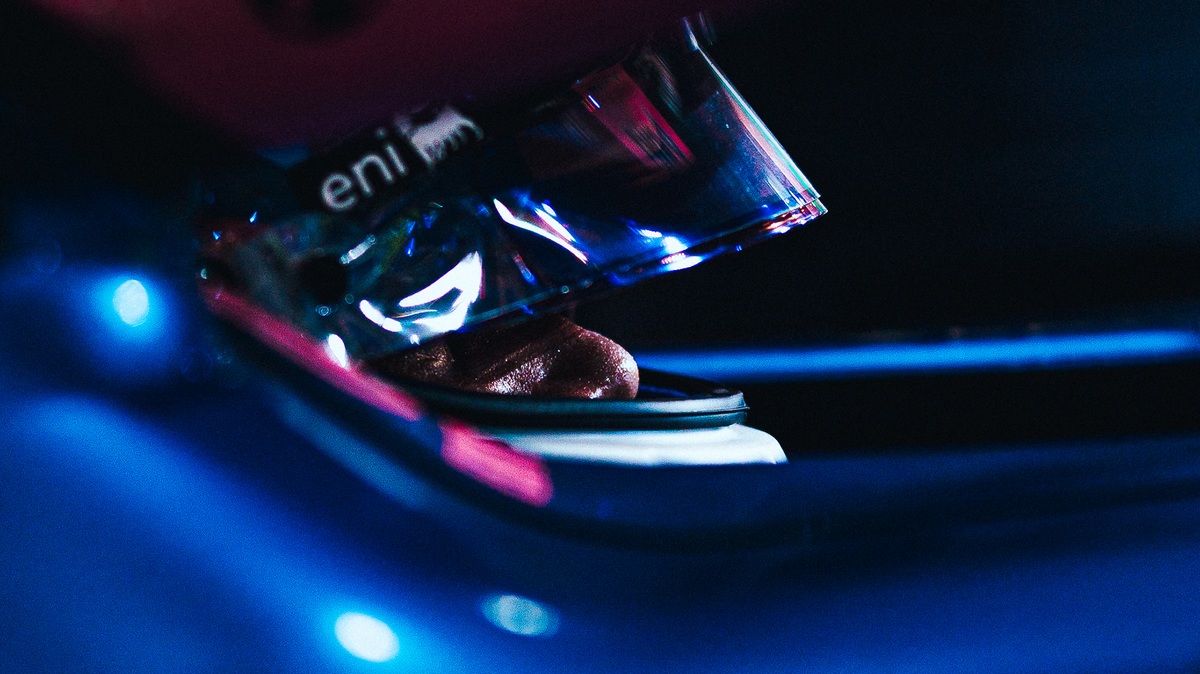
Formula 1 teams strategically manage light exposure to stabilise driver alertness across time zones and night races. Commercial and private aviation adjust cockpit and cabin lighting to mitigate circadian disruption on long-haul routes.
High-performance training facilities adjust changing-room lighting before late kick-offs to biologically “upshift” athletes without relying solely on pharmacological stimulants.
In these environments, light is understood as a physiological lever, something that can advance, delay, stabilise or disrupt human biology.
Yet in most wellness and commercial settings, we are still specifying lighting as if its only job is to help us see.
If we want bio-aligned lighting to be credible (and actually helpful), we need to get clearer on what “good” and “great” look like, especially for practitioners who specify and sell it.
This is an area where I see universal confusion and huge investment errors.
A couple of which I’m addressing with some parties concerned this week.
One of the businesses concerned currently has a market cap of $95B, and they’ve been “washed,” so to speak.
So please don’t feel stupid here.
This is somewhat complex, and I’m going to try to distil it as much as I can here.
Firstly, lighting does two different jobs, and we keep mixing them up.
We have the same issue in the world of red light, but that's for another article entirely.
Your eyes feed information into two overlapping systems.
One is conscious. One is automatic.
One helps you see the world. The other tells your brain what time it is.
If you remember nothing else from this piece, remember this: Lighting must be designed for both seeing and signalling.
The visual system
How bright it looks, how well you can safely perform the task in front of you.
Something we often term “task” lighting.
The question we ask here is: Does the lighting safely support the work?
Lux is designed for this purpose. It is photopically weighted to human visual sensitivity and is a robust metric for visual safety and performance. It is not, however, weighted to melanopsin-mediated non-visual pathways [2].
The biological system
How “day” or “night” your brain thinks it is.
I can send a signal to your brain via the optic nerve that tells you it’s the day. That supports a number of biological systems that push you into a “wake” state.
The primary pathway here involves intrinsically photosensitive retinal ganglion cells (ipRGCs), which are maximally sensitive to short-wavelength light and project to the suprachiasmatic nucleus (SCN), the master circadian clock [2,8].
I can also dim the light and move you through a biological sequence.
As a working example, many sports teams fit their changing rooms with lighting that can do this.
Imagine a late, 8 pm kick-off.
Most players will be on a biological downshift and will be a few hours from sleep.

Traditional stimulants would disrupt sleep quality and recovery, so how do we create a biological upturn that we can then shift back when the game is over?
Light.
The question we ask here is: Does the lighting support the biology?
Evidence supports that daytime melanopic exposure increases alertness and can improve certain cognitive tasks, particularly under sleep restriction or high cognitive demand [5,7].
However, effects are context-dependent and modulated by task difficulty and timing [6,9].
In wellness, depending on the space’s purpose, the question needs to be both.
If your workspace is badly lit biologically, it’s not that you can’t do the work; it’s that your system may rely on unnecessary support from stimulants, and it may also alter your propensity for errors.
Yes, we have studies supporting all of this, including the potential ROI from fixing this issue [5,7].
The problem
We use the wrong yardstick for the biological job.
We’re creating bright task lighting and labelling it as biological support.
So what’s the difference?
There is some confusion about labelling.
The Commission Internationale de l’Éclairage (CIE), the global authority on light, illumination, colour, and photometry, introduced melanopic equivalent daylight illuminance (m-EDI) to quantify non-visual photoreceptor stimulation [2].
Lux vs melanopic light: the misunderstanding at the heart of “circadian-washing”.
Lux is a great metric for visual design.
But your circadian system doesn’t respond to light the same way your visual system does.
Melanopic EDI provides a spectrum-weighted estimate of melanopsin stimulation and correlates with circadian phase shifting and melatonin suppression under many conditions [2].
In simplistic terms:
- Lux = “How bright it looks”
- Melanopic EDI = “How strong the ‘daytime signal’ feels to your biology”
Two rooms can look equally bright and feel completely different biologically.That is where most design errors begin.
Because melanopic impact depends on spectral power distribution (SPD), not just intensity, two rooms set to 500 lux can deliver markedly different melanopic signals depending on spectrum and geometry [1,3,4].
Why the universal confusion?
Because people hear “melanopic lux” and assume you can convert it from regular lux, like it’s a simple exchange rate.
There is no universal conversion factor.The spectrum matters. The direction matters. The timing matters.
To estimate melanopic impact, you need the spectrum (which wavelengths are present), not just a brightness number [2,3].
10,000 lux also became the clinical convention in SAD light therapy.
It stuck because it was measurable and repeatable — not because lux is biologically perfect.
That’s similar to how early sleep science relied heavily on duration before architecture and circadian timing became mainstream metrics.
“Aligned with daylight” isn’t a colour temperature.
If we want to influence biology, we need to understand:
- Melanopic EDI (m-EDI)
- Vertical eye-level measurements
- Spectral power distribution data
- Dose curves for phase shifting
Dose–response relationships for non-visual light effects show that timing and geometry significantly influence outcomes [8,11].
Metameric studies demonstrate that melatonin suppression can be dissociated from subjective alertness or cognitive performance under certain conditions, underscoring why Kelvin alone is meaningless [1,10].
A real-life example
My vertical eye-level measurement right now, as I write this indoors, is 524 melanopic EDI lux.
If I sit at the opposite side of my desk, facing away from the window, that drops to 69 melanopic EDI lux.
Same room. Same fixtures. Same time of day.
Completely different biological signal.
That is not a lighting change.
It’s geometry-dependent.
That is a retinal exposure change.
Field studies confirm that vertical eye-level exposure varies dramatically with orientation and position, even when horizontal desk lux remains constant [1,3,4].
At 524 m-EDI lux, I am well above the 250 lux daytime reference suggested in several consensus and applied frameworks [1–4].
When I turn around and drop to 69 m-EDI lux, I am in biologically mild territory.
Not dark, but neutral or down-regulatory. Not the outcome I'm looking for in my work environment.
The purpose and outcome of a room should drive design
And this is the part most people forget:
Humans evolved with massive amplitude
The natural light cycle has a huge amplitude:
- Day: tens of thousands of melanopic lux
- Night: near zero
Modern life compresses that amplitude:
- Day: 200–500 m-EDI lx indoors (if well designed)
- Evening: 50–150 m-EDI lx from screens and lights
- Night: not fully dark
So paradoxically:
We now have weaker days and brighter nights.
That’s the disruption.
Evening high-melanopic exposure suppresses melatonin and can shift circadian phase, with downstream effects on sleep timing and architecture [1,10–12].
However, melatonin suppression does not automatically translate into immediate subjective alertness or performance changes, which is why measurement must include multiple domains [1,10].
Supporting the biology

Light is one of the primary inputs to the circadian system.
But it is not the only one.
Timing of nutrition, stimulant exposure, and recovery signals also plays a powerful role in regulating alertness and sleep architecture.
This is exactly the philosophy behind the HMN24 system.
Rather than relying on heavy stimulant loading, HMN24 products are designed to support the body’s natural circadian rhythm across the day:
RISE
Supports morning alertness and cognitive activation while reinforcing daytime biological signals.
FLOW
Supports sustained cognitive performance and nervous system balance during the active phase of the day.
PRE-SLEEP
Supports parasympathetic down-regulation and sleep architecture during the night phase.
When light exposure, behavioural timing and physiology are aligned, performance and recovery become far more sustainable.
Because ultimately, human performance isn’t just about pushing harder.
It’s about working with biology rather than against it.
The other biological challenge
I wake at 6 am and run a 6–10 wake/sleep schedule.
For roughly 220–240 days a year, I don’t have access to the sun at that time.
So I need tools.
One of those tools is biological lighting.
Devices delivering ≥250 m-EDI lx at eye level can provide a strong circadian anchor when natural light is unavailable [2–4].
If I’m travelling, I can deliberately manipulate that anchor.
If I need an earlier start, I anchor biology with light management.
If I'm phase shifting to another time zone. The same.
And I reduce exposure to <20–30 m-EDI lx 2–3 hours before sleep to protect melatonin onset and circadian stability [1–4].
I would ideally aim for sub-10 m-EDI lx, which is biologically “cleaner,” but is often impractical outside controlled environments.
The goal is not perfection. The goal is directional consistency, brighter days, darker evenings.
How is this light tested?
In the field, we use calibrated biological light meters to profile spectral characteristics and melanopic stimulus.
Most spec sheets do not tell you what the eye is actually receiving. Measurement closes that gap.
There is a recognised need for standardised field measurement protocols capturing geometry, timing, and orientation [3,4].
Wearable and room-based sensors show promise, but device variability requires careful validation and reporting transparency [4,13].
Laboratory-grade spectroradiometers provide high-resolution SPD data, but in most environments, what matters more than laboratory precision is:
- Correct geometry
- Correct timing
- Correct contrast
- Consistent amplitude
Practical Take-Home: Manage the Signal
We need to manage and regulate light intentionally if we are serious about performance, recovery, and long-term health.
That means:
- Create strong days (≥250 m-EDI lx when possible)
- Create soft evenings (<20–30 m-EDI lx 2–3 hours before sleep)
- Protect darkness at night, the bedroom should be like a Batcave.
- If you intend to measure, you must measure at eye level, not just on the desk
- Stop confusing colour temperature with biological impact.
- We universally need to spend more time outdoors.
Light is not static décor.
It is a programmable biological input.
It can be supportive or disruptive.
If we don’t manage it, it manages us.
The difference between “circadian-washed” lighting and genuinely bio-aligned lighting is simple:
Amplitude, timing, and geometry, not Kelvin.
References
- Blume, C. et al. (2022). Melatonin suppression does not automatically alter sleepiness, vigilance, sensory processing, or sleep.
- Brown, T. (2020). Melanopic illuminance defines the magnitude of human circadian light responses under a wide range of conditions. Journal of Pineal Research, 69(1).
- Zeeuw, J. et al. (2019). Living in Biological Darkness. Journal of Biological Rhythms, 34(4), 410–431.
- Bessman, S. et al. (2024). Shining Light on Photic Measurement for Sleep and Circadian Field Studies. Sleep, 47(S1).
- Ru, T. et al. (2021). Diurnal effects of illuminance on performance. Lighting Research & Technology, 53(8), 727–747.
- Lok, R. et al. (2018). White Light During Daytime Does Not Improve Alertness in Well-rested Individuals. Journal of Biological Rhythms, 33(6), 637–648.
- Grant, L. et al. (2023). Supplementation of ambient lighting improves daytime alertness and cognitive performance in sleep-restricted individuals. Sleep, 46(8).
- Prayag, A. et al. (2019). Dynamics of Non-visual Responses in Humans. Frontiers in Neuroscience, 13.
- Chakraborty, R. et al. (2022). Illumination intensity effects in young adults. Ophthalmic & Physiological Optics, 42(4), 762–772.
- Rahman, S. et al. (2018). Functional decoupling of melatonin suppression and circadian phase resetting. Journal of Physiology, 596(11), 2147–2157.
- Lu, Y. et al. (2021). Calculated Circadian Effects of Light Exposure. Applied Sciences, 11(24).
- Blume, C. et al. (2022). Evening melanopic exposure and sleep outcomes.
- Ishihara, A. (2025). Performance of wearable light sensors for melanopic illuminance. Sleep, 49(2).